
Case Study:
Students Build Archival Platform on Nazi-Era Looting

JDCRP and the Hasso Plattner Institute (HPI) at the University of Potsdam launched a special senior year project to test the use of artificial intelligence in facilitating access to archival data.
From 2023-2024, eight bachelor students developed a prototype of an AI-powered research platform designed to search for and integrate relevant archival documents on Nazi-era cultural plunder. The project was supervised by HPI Professor Felix Naumann, in close cooperation with JDCRP experts Jonathan Blok and Anne Uhrlandt.
STEP 1: Understanding the History
Before planning their approach, the students first built a working knowledge of the Holocaust-era dispossession and expropriation of Jewish-owned cultural property.
“Before we worked on Nazi cultural looting in the course of our bachelor’s project, we were not aware of its extent… As a team, we watched theater plays and movies, visited several museums, and met with provenance researchers and various art historians. We did not know the lengths to which the Nazis used art lootings to oppress the Jewish people.” – HPI Student
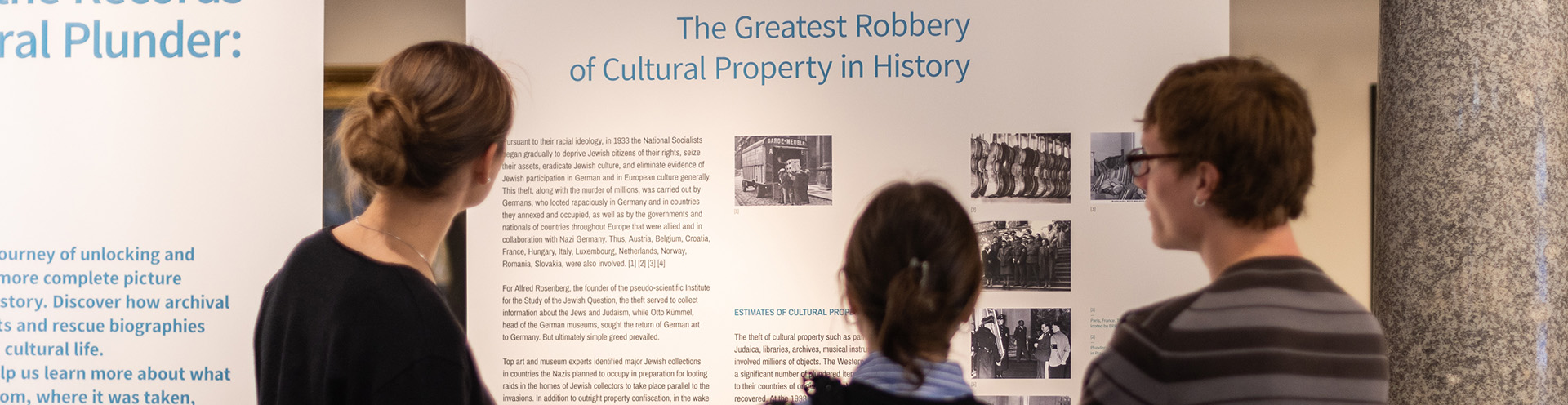
Among their sources, students conducted interviews at the Zentralrat der Juden in Deutschland (Central Council of Jews in Germany) and in-person research at both the Jewish Museum Berlin and the Brandesburgisches Landeshauptarchiv (Brandenburg State Main Archive).
STEP 2: Building a Prototype
Organizing as a team, the students divided development work packages, used collaborative tools, conducted standing meetings, and evaluated their approaches collectively.
“To find a comprehensive solution, we had to consider the data’s political, legal, historical, and scientific significance.” – HPI Student
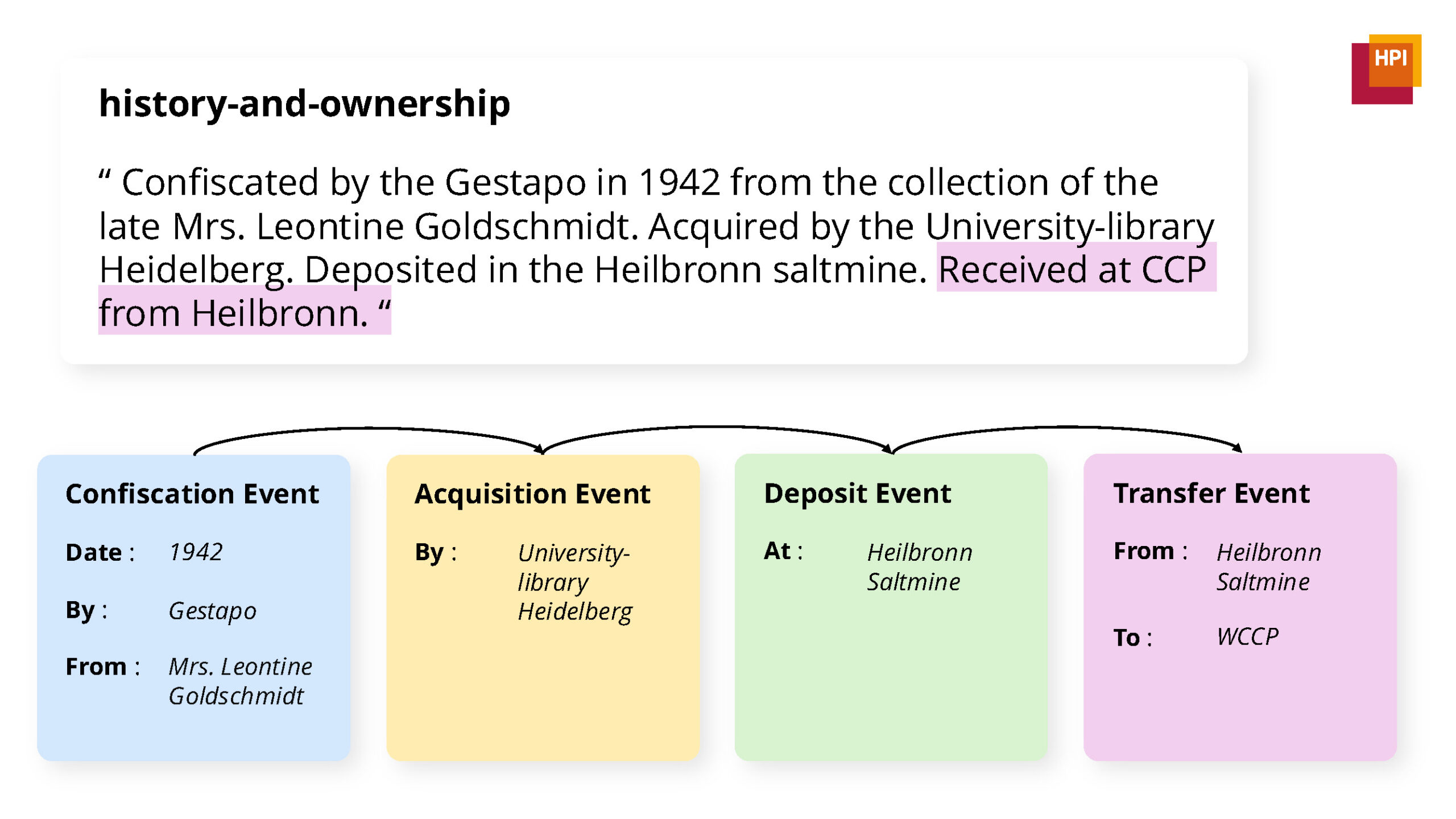
The endeavor to integrate tens of thousands of assets sourced from diverse archives required experimentation and strategic shifts. The students decided to use OpenAI’s GPT-4 to process and organize some of the digitized material. Mindful of the risks of AI mistakes—especially in the context of such sensitive history as Nazi-era looted art—the students implemented safeguards and careful considerations to ensure accuracy. They then constructed search and filtering mechanisms, as well as an aesthetically cohesive visual interface for their platform.
“Being part of an eight-person team at HPI, supervised by one professor and one PhD candidate, while simultaneously communicating with JDCRP stakeholders and external advisors and partners, meant that we had to communicate our plans and progress a lot.” – HPI Student
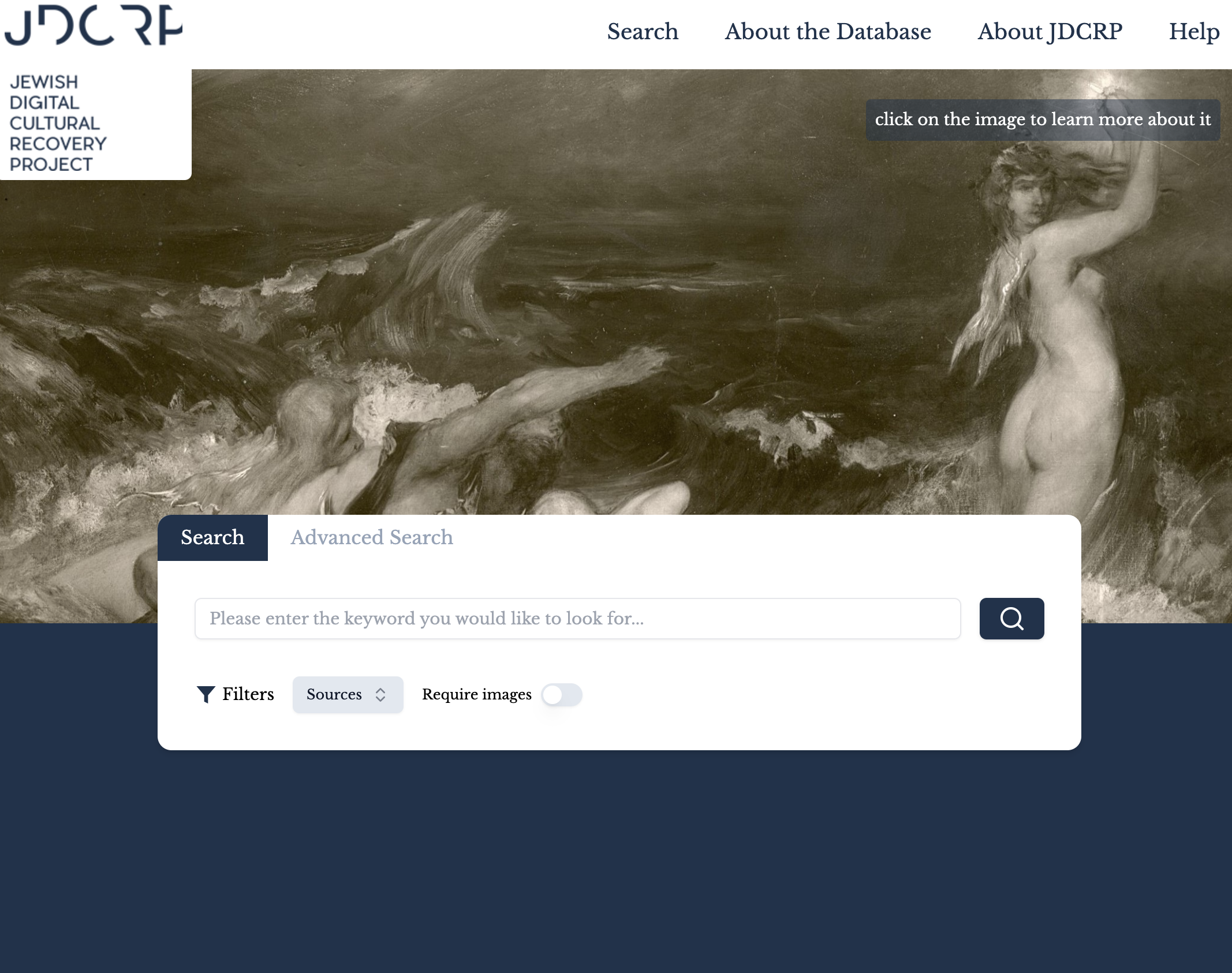
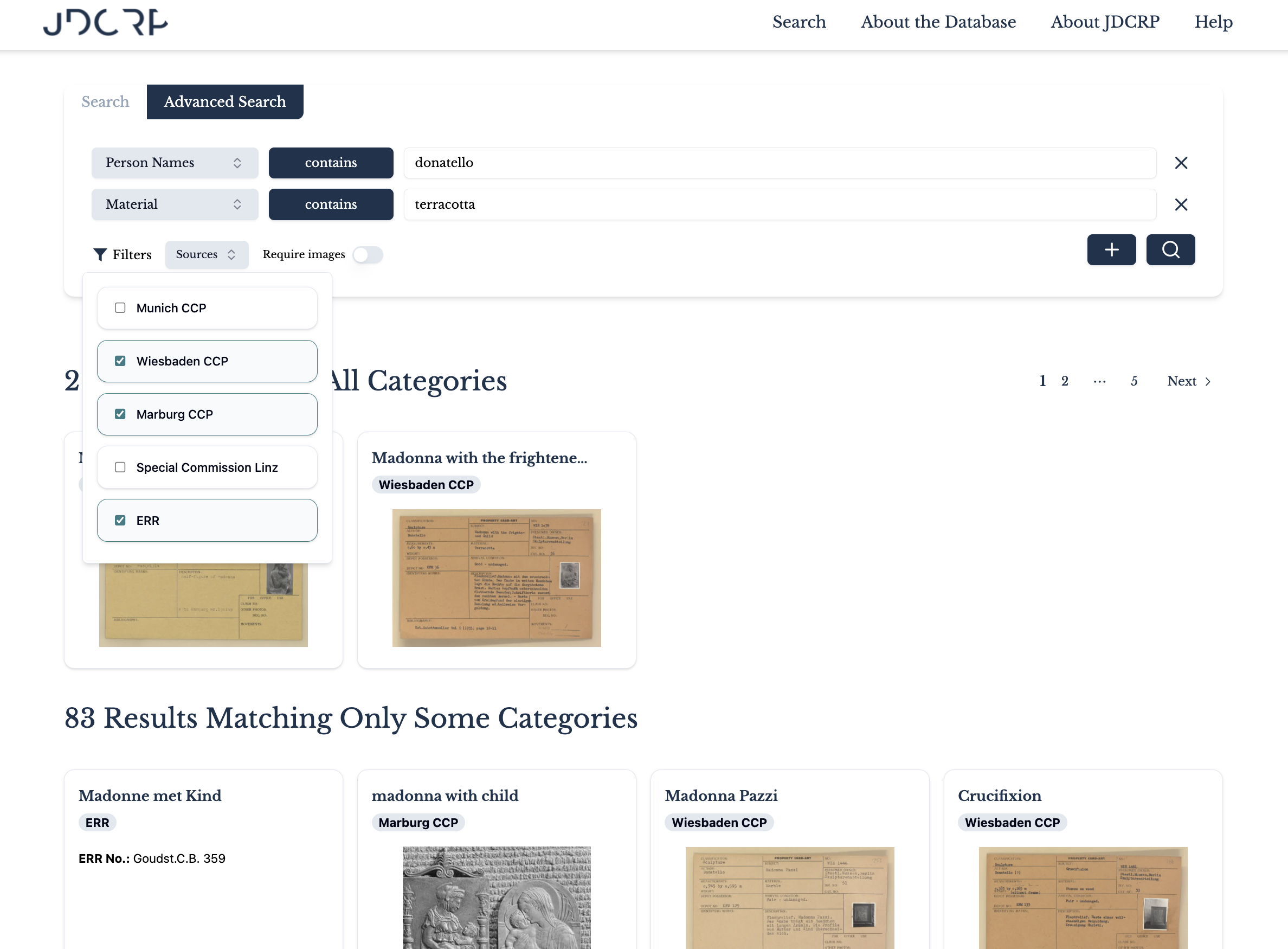
After months of dedicated work, the team completed development of a functional, AI-based research platform, which they titled “ReCLAIM.” (Click images for fullscreen view.)
STEP 3: Reflecting
In July 2024, the students presented their work at a public event attended by JDCRP staff.
“By making data on Nazi cultural looting more accessible, a central archival data repository promotes research on the subject and aids public awareness of the systematic erasure of Jewish identities. As an educational database, it has the potential to reveal patterns of antisemitism and counter the distortion and trivialization of the Holocaust.” – HPI Student
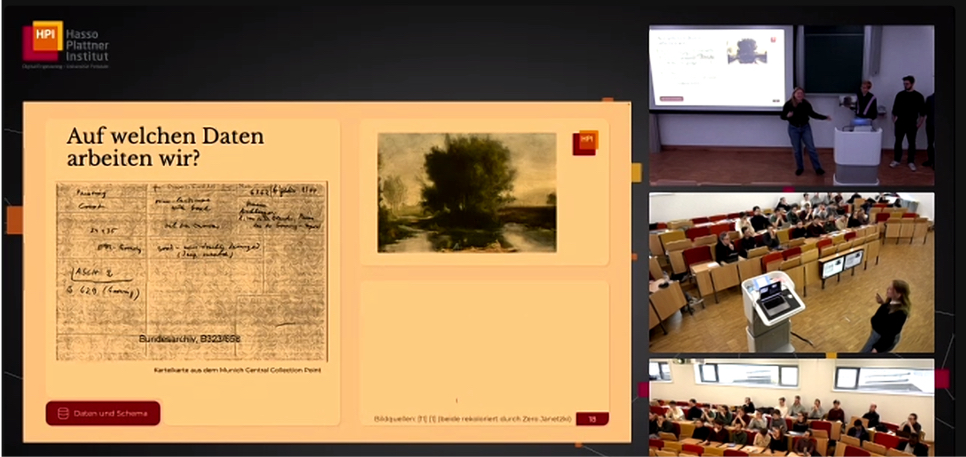
Each student wrote a thesis on a different aspect of the project.
“We realized how much provenance research has already changed through digitalization, but also what potential still remains.” – HPI Student
They also documented their process, offering detailed reflections that can be viewed here:
Our congratulations and gratitude to the students: Nike Luise Garberding, Zero Janetzki, Romy Karbstein, Antonio Krühler, Carl Friedrich Mecking, Konstantin Sturtzkopf, Sebastian Walker, and Jan Wilhelm.
The JDCRP is eager to inspire other students and educators to engage with provenance research and the history of Nazi-era cultural plunder. These topics are integrable in coursework for STEM, arts, and history, among other fields. JDCRP staff will gladly consult on education possibilities for specific institutional or curricular contexts.
If you are an educator or student interested in JDCRP collaboration, please contact info@jdcrp.org.