
Profile:
Freud Family
(Hover over images for sourcing information.)
The Freud family occupied prominent positions in Austria’s intellectual, cultural, and economic life before 1938: Sigmund Freud (1856–1939) was the internationally renowned founder of psychoanalysis, his brother Alexander Freud (1866–1943) was a wealthy publisher and transport law expert, and their four sisters—Rosa, Maria, Pauline, and Adolfine—lived middle-class Viennese lives.
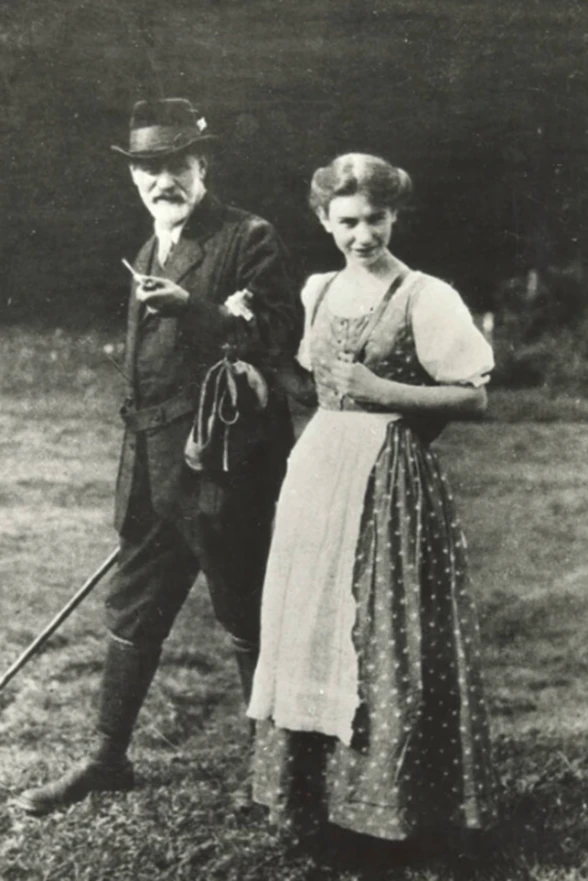
Source: Sigmund Freud Archive, AT-SFP/D/68B-3143-G/32/1

Source: Alexander and Sigmund Freud in Grinzing, 1937, Freud Museum. https://www.freud-museum.at/en/exhibitions-program/exhibition-details/articles/documents-of-injustice-the-case-of-freud
Following the Anschluss (the annexation of Austria into Nazi Germany), the family became a target of Nazi persecution, facing forced emigration, systematic property registration, and expropriation. While Sigmund and Alexander escaped into exile, all four sisters were dispossessed, deported, and murdered.
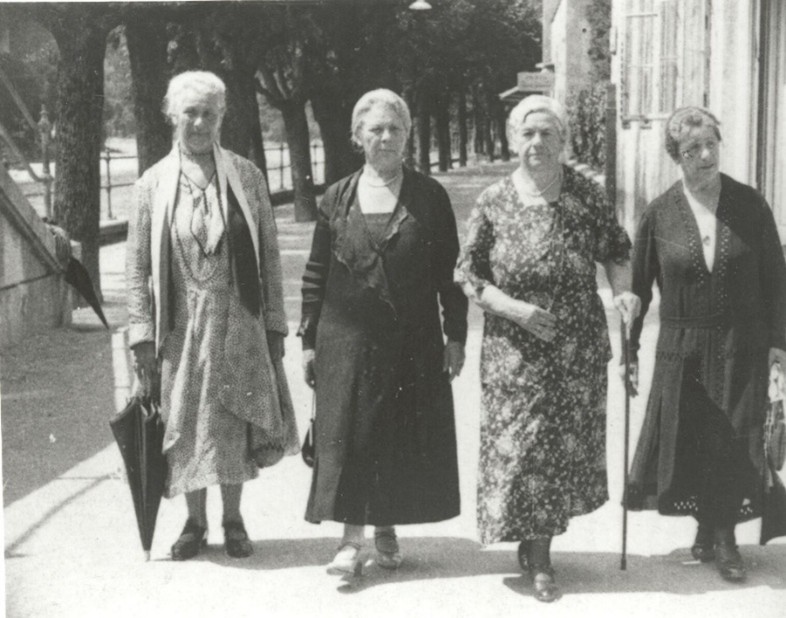
Source: https://www.freud-museum.at/en/subsites-gallery/articles/the-murder-of-the-sisters
The scale of looting from the Freud family ranged from businesses, books, and art collections to household goods and religious objects, illustrating the breadth of Nazi cultural plunder.
Sigmund Freud’s Publishing House
Although Sigmund Freud managed to export his personal study, library, and antiquities to London in 1938, significant cultural losses occurred through the expropriation of the International Psychoanalytical Publishing House. After the Anschluss, the publishing house was placed under a provisional administrator, Anton Sauerwald, and its assets were confiscated. Approximately fifteen railcars of books—valued at an estimated 2–3 million Reichsmarks—were seized and destroyed, representing both Freud’s personal property and the institutional backbone of psychoanalysis in Austria.
Alexander Freud’s Cultural Property

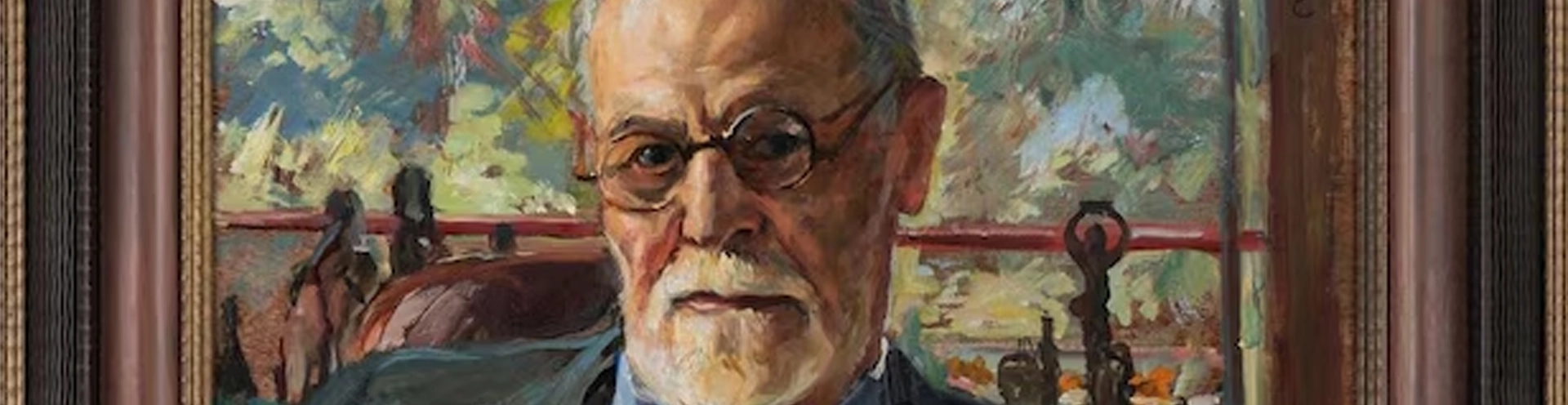
Source: https://freunde-jmw.at/project/victor-krausz-bildnis-sigmund-freud-1936
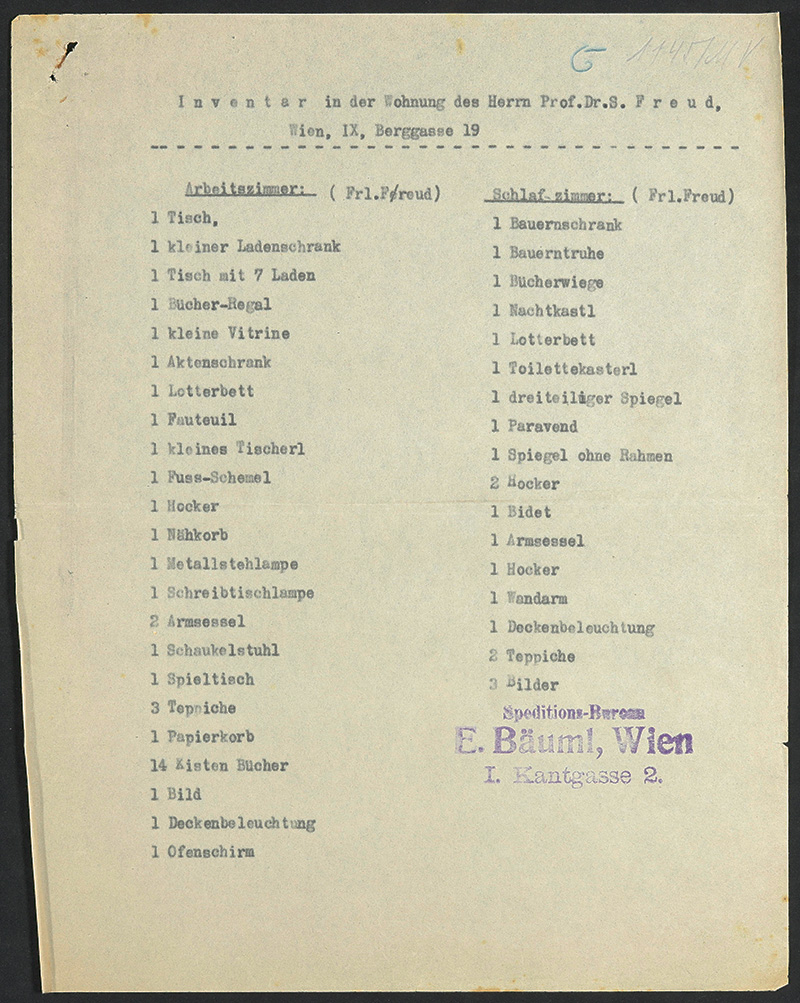
Alexander Freud, unable to export his belongings due to bureaucratic obstruction and war, lost his entire cultural property after it was seized in 1940 by the Vugesta, a looting organization of the Gestapo in Austria. His looted assets included furniture, books, silver, and an important art collection—notably Wilhelm Viktor Krausz’s 1936 oil portrait of Sigmund Freud. For decades, the painting was believed lost, and only studio copies were known. Recent provenance research has identified a work acquired by the Jewish Museum Vienna in 2019 as the likely original, prompting renewed investigation into its seizure and ownership history.
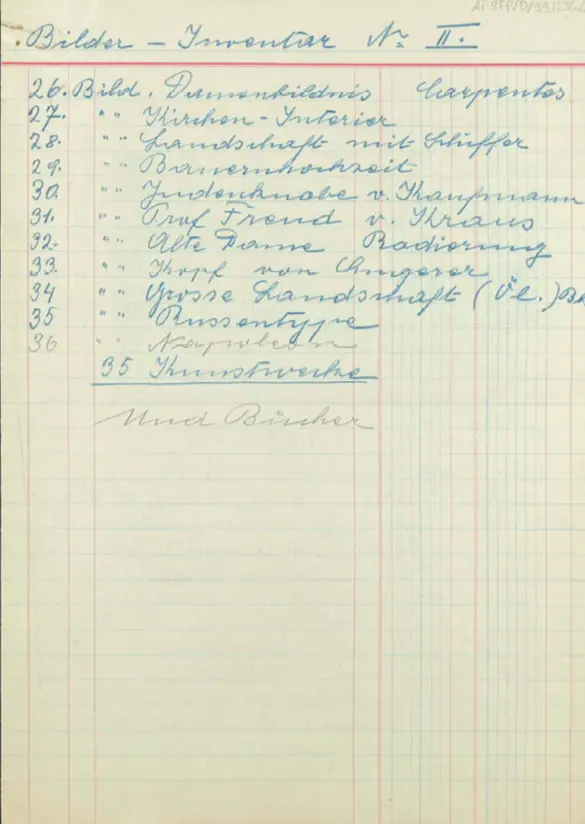
Source: Emigrationsakt Alexander Freud AT-SFP/D/39-41.
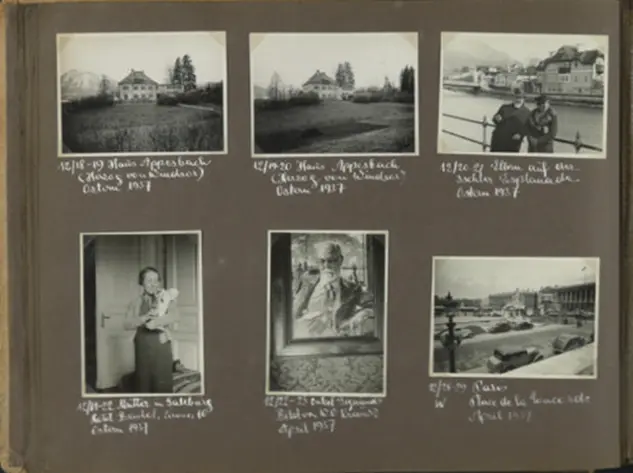
Source: Picture album 1937/1938, Sigmund Freud painting by W.V. Krausz in April 1937, Photo Nr. 12/22-23, AT-SFP/D/68B-3153-G/13.
Unsuccessful Restitution Attempts and Recent Developments
After the war, Harry Freud (1909-1968), Alexander’s son, pursued restitution for decades through American, Austrian, and German authorities, filing extensive claims for looted cultural property and financial assets.
Despite detailed documentation and legal advocacy, no object-level restitution of Alexander Freud’s cultural property was achieved during Harry’s lifetime, and compensation for Alexander’s looted cultural property was largely limited to securities and jewelry. Partial payments were granted only in the 1970s, after Harry’s death, to his widow, and these payments excluded compensation for looted artworks and furnishings.
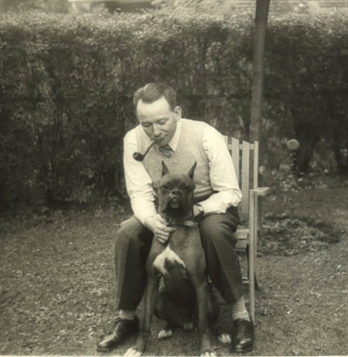
Source: AT-SFP/D/68B-3143-G/11/5, Sigmund Freud Archive.

Source: DN 1929 — US, USACA – Property Control Branch, 1945-1950, PC/V/I/28 Harry And Sophie Freud -Cases and Reports Pertaining to Property Administered by the Vienna Area Command (VAC), https://www.fold3.com/image/306500855/pcvi28-harry-and-sophie-freud-page-1-us-usaca-property-control-branch-1945-1950.
More recently, renewed provenance research—particularly concerning the Krausz portrait of Sigmund Freud—and newer claims mechanisms have reopened aspects of the case without fully resolving the losses.
The Vienna-based Freud Museum is currently presenting an exhibition titled “Documents of Injustice: The Case of Freud.” The exhibition runs until November 9, 2026, and sheds light on the final months of the Freud family in Nazi Vienna, as well as on the events which transpired in the following years. It traces in detail the systematic dispossession of Sigmund Freud and his brother Alexander and presents new findings that deepen our understanding of the fate and murder of their four sisters—Rosa, Maria, Adolfine, and Pauline—by the Nazi regime.
The Freud Museum has made its archival holdings accessible online here.
This biography is part of JDCRP’s series, “Profiles of European Jewish Art Collections and Collectors.” Additional biographies will be published regularly.
Access our other biographies here: