
Profile:
Hermann Leopoldi
(Hover over images for sourcing information.)

Source: https://www.buchenwald.de/en/geschichte/biografien/ltg-ausstellung/hermann-leopoldi, accessed December 29, 2025.
Hermann Leopoldi (1888–1959) was one of Vienna’s best-known interwar musical humorists, as well as a songwriter and performer whose ear for the Wienerlied (Viennese song) made him a household name. In 1921, the Leopoldis officially changed their name from Kohn to Leopoldi, a change that affected all family members and was made, in part, to obscure the family’s Jewish origins.
Following the 1938 Anschluss (the annexation of Austria into Nazi Germany), Hermann Leopoldi was subjected to systematic Nazi persecution, including arrest, deportation, and the confiscation of his cultural property. Like many Jewish artists, he was excluded from Austria’s music economy through blacklisting and bureaucratic expropriation, while his personal belongings—including his Bösendorfer piano—were looted.
After surviving concentration camps and exile, his postwar return to Vienna made him a symbol of cultural reconstruction, later officially honored by the Austrian state. He died in 1959 in Vienna.
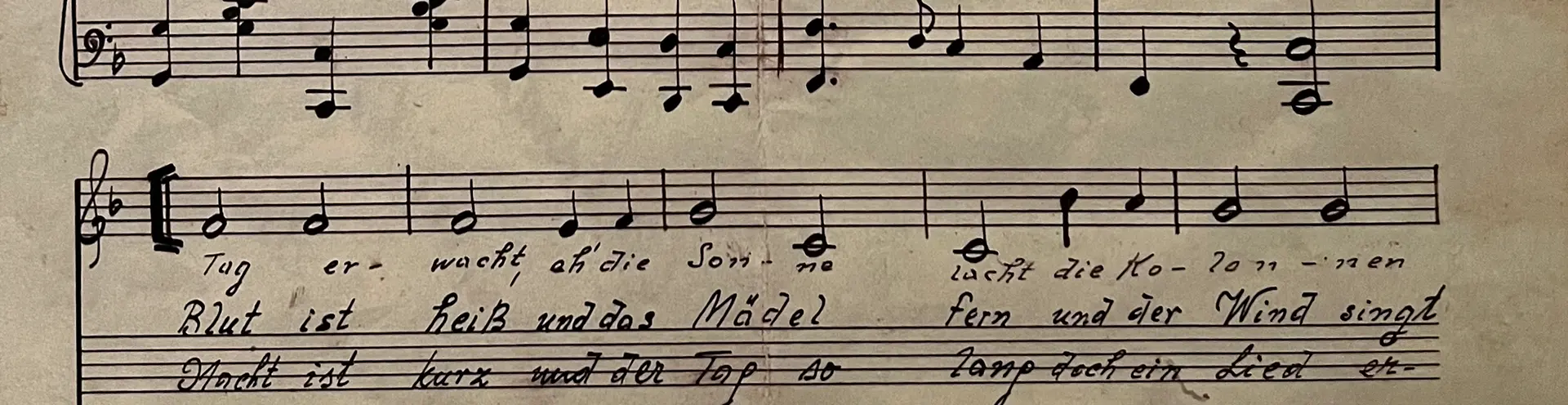
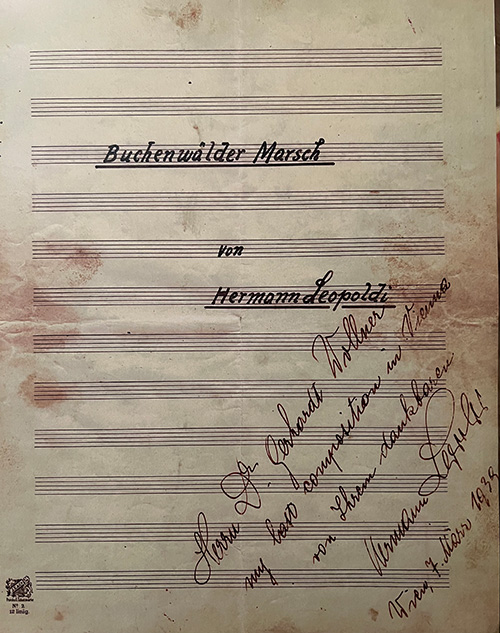
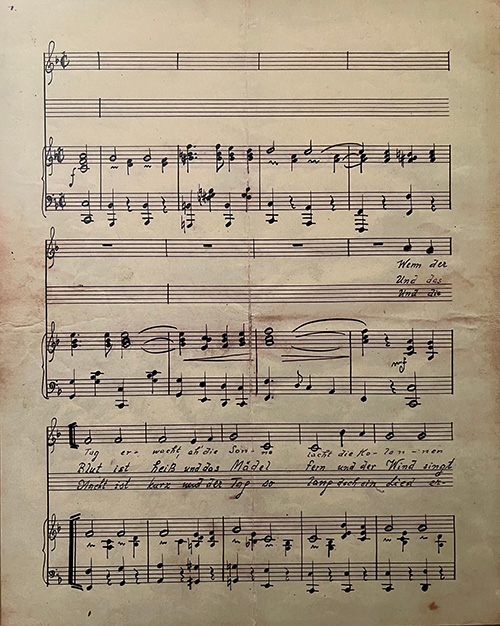
The “Buchenwald Marsch“
While imprisoned in the Buchenwald concentration camp in late 1938, Hermann Leopoldi composed the “Buchenwald March” together with lyricist Fritz Löhner-Beda. The march-style song—written and composed by Jews at the behest of a Nazi-decreed “competition” at the camp—was embraced by the SS guards, who ordered the camp orchestra to play it several times a day as prisoners marched to and from forced labor. The guards were seemingly unaware of the subversive message of the song’s final verses.
Translated from German:
“O Buchenwald, we do not whimper and complain,
and whatever our fate may be,
we still want to say yes to life,
for one day the day will come: then we shall be free!”
– from the “Buchenwald March”
The piece is a stark example of how music was weaponized by camp authorities while it simultaneously offered psychological support to prisoners.
Listen to the “Buchenwald March” below, and view sheet music:
Hermann Leopoldi’s Looted Piano
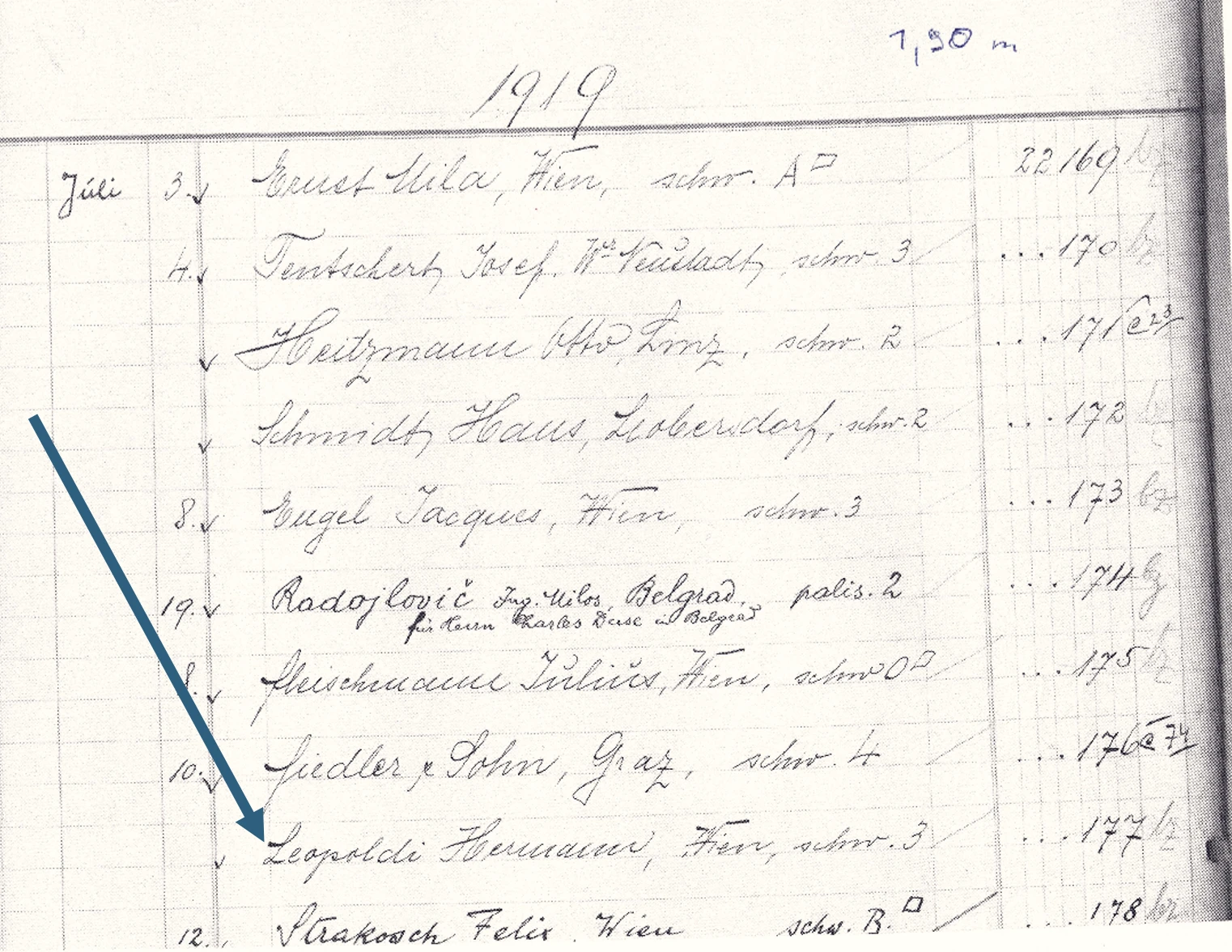
Hermann Leopoldi owned a Bösendorfer piano—an instrument known for its exceptional craftsmanship, distinctive sound, and long musical heritage—that was confiscated during the Nazi campaign of looting Jewish property following the Anschluss. Although detailed inventories of his apartment have not survived, eyewitness testimony and restitution records—confirm that armed Nazi officials seized valuables from his home, consistent with broader patterns of Aryanization. Leopoldi later filed restitution claims after the war, but the piano was never recovered.
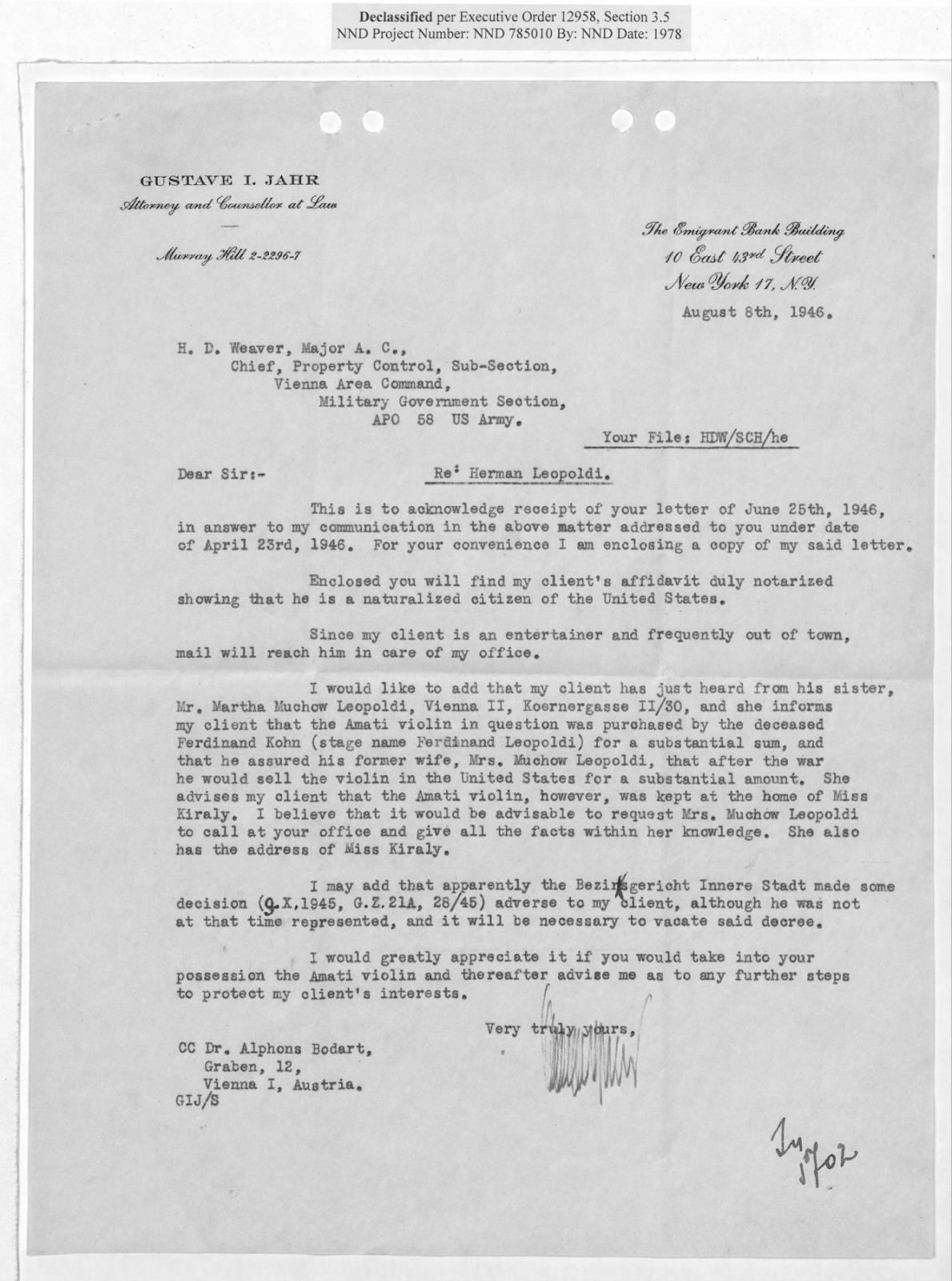
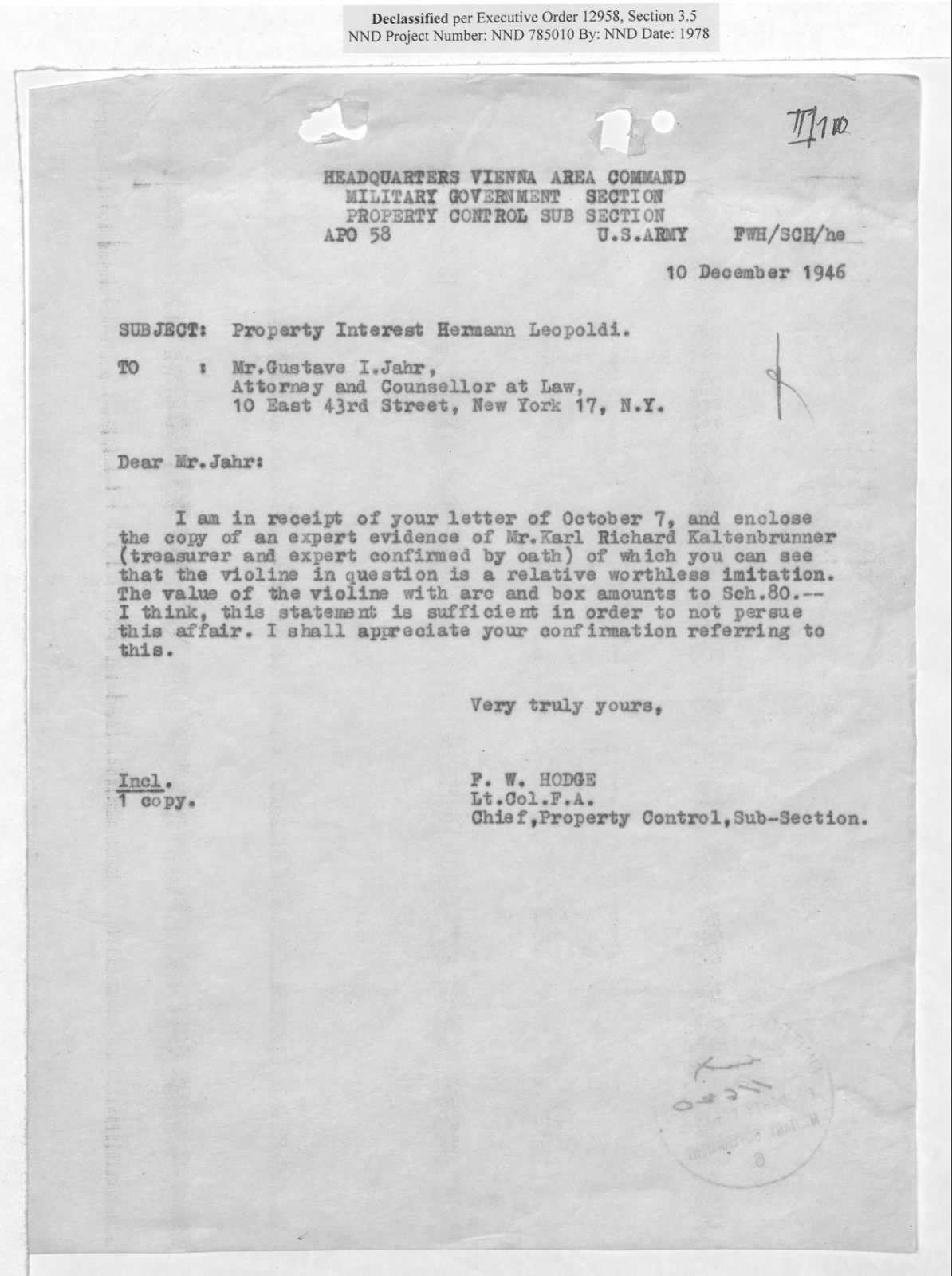
Ferdinand Leopoldi’s Looted Violin
Hermann’s brother, Ferdinand Leopoldi, died in 1944 amid imprisonment and torture by the Gestapo. A violin associated with Ferdinand was left in the care of his non-Jewish partner while he went into hiding during the Nazi period.
After the war, Hermann sought restitution of the instrument, which was believed to be an Amati violin—an instrument valued for its impeccable craftsmanship, historical importance, and tonal refinement. Postwar authorities dismissed the claim after reclassifying the violin as a low-value imitation. Click the images below to read letters from the restitution exchange.
The case illustrates how restitution processes often ignored the coercive circumstances under which property transfers occurred and failed to recognize the emotional and familial significance of looted objects, including musical instruments, no matter their financial value.
This biography is part of JDCRP’s series, “Profiles of European Jewish Art Collections and Collectors.” Additional biographies will be published regularly.
Access our other biographies here: